
Crop protection
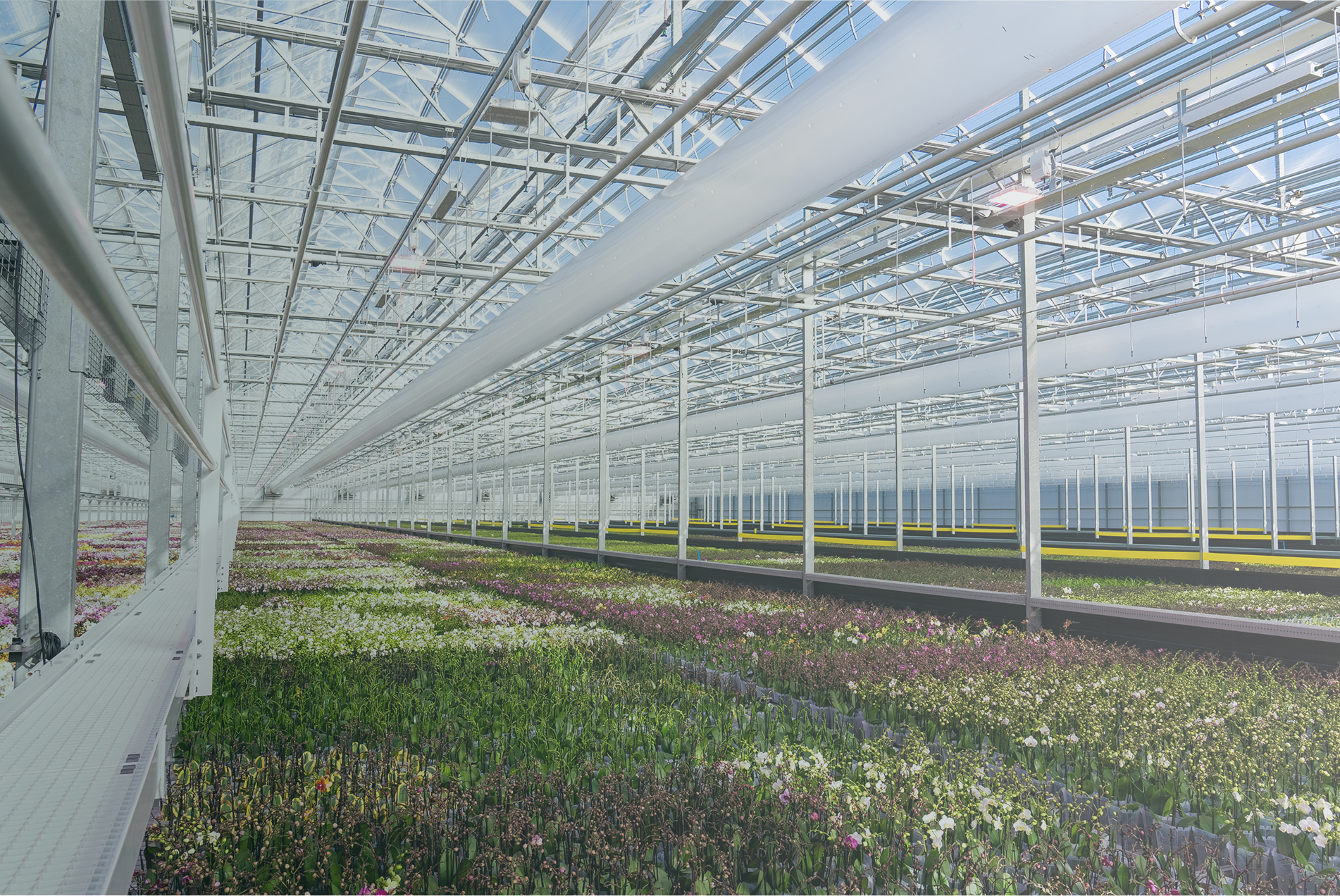
Healthy flowers and plants
Flowers and plants are grown with great care. In addition, it is important that crops stay healthy so that they can grow and flourish properly. During cultivation, flowers and plants are exposed to a variety of diseases and pests, from fungi to harmful insects. Growers protect their crops to keep them healthy and prevent waste. They do this with knowledge, expertise and increasingly sustainable crop protection products, so that flowers and plants can be grown healthily and safely.
Sources: Greenhouse horticulture Netherlands (2024); MPS (2024); Royal FloraHolland (2025)
What is crop protection?
Crop protection means: first of all, preventing and combating diseases, pests and weeds and protecting plants so that they can grow healthy.
In the Netherlands and within the European Union, strict rules apply to the use of plant protection products. Only products that have been extensively tested and found to be safe may be used. There is a lot of public attention on this topic, because people want to know how safely and sustainably the crops are grown.
Floriculture works according to integrated crop protection (Integrated Pest Management, IPM). The prevention of diseases and pests is central to this. First, we focus on prevention and biological control, and only as a last step on chemical agents that are used under strict supervision.
Sources: Ctgb (2024); European Commission (2024); RIVM (2023)
Different crops, different approaches
Floriculture is broad and diverse. In greenhouses, growers mainly use natural enemies to prevent pests. These can be insects, such as parasitic wasps and predatory mites, but also microorganisms such as bacteria and fungi. The majority of growers work with insects in their greenhouses.
In open cultivation, for example with bulbs or perennials, the situation is different. This is where bacteria and fungi are mainly used as biological control agents, because beneficial insects easily blow away or fly away in the open air. Only when the biological approach works inadequately, a chemical agent is used locally. The sector is actively working on green alternatives that are just as effective and have less impact on people and the environment.
In other climate zones, such as Africa and South America, different conditions and pest pressures are at play. There, crop protection products are sometimes used that are not allowed in Europe. Many growers do follow the same international labels as Dutch growers, such as MPS, GlobalG.A.P. and Fairtrade.
Sources: MPS; Global G.A.P.; Royal FloraHolland; Koppert Biological Systems
Consciously dealing with nature and health
Dealing consciously with nature and health is something for all of us. We are increasingly thinking about what we eat, wear or bring home, and that includes flowers and plants. That awareness is growing, and that is a good thing. She ensures that knowledge, research and practice come closer together.
People are sometimes concerned about the effect of plant protection products on health, soil and water. Those concerns are understandable. That's why the sector is constantly researching and improving its working methods so that flowers and plants can grow responsibly.
In floriculture, researchers, growers and organizations work together with independent institutions such as WUR, RIVM and Ctgb. Through research and transparency, it is becoming increasingly visible what is already happening to understand and reduce risks.
Sources: RIVM (2024); Ctgb (2024); WUR (2024)
Innovation and Progress
The Netherlands is a global leader in sustainable cultivation. Growers are increasingly using beneficial insects and other innovations such as drones and sensors to identify pests early and target them in a targeted manner. More and more companies are also working with certifications such as MPS-ABC, which provide insight into the use of resources and the environmental impact. This puts the Netherlands among the leaders in sustainable cultivation and is a global leader in knowledge and innovation.
The ambition is clear: to grow largely without chemical plant protection products by 2030. This step is made possible by knowledge sharing, technological innovation and cooperation throughout the chain.
Sources: MPS (2024); Glastuinbouw Nederland (2024); CBS (2024)
FAQs
More facts and figures
FAQs

Veelgestelde vragen

