The value of floriculture

An impactful sector

Flowers and plants are not only beautiful to look at, they also have great economic and social value. Floriculture provides innovation, knowledge development and employment, in the Netherlands and far beyond.

The Netherlands is a global leader in the production, trade and logistics of flowers and plants and forms the heart of a unique ecosystem in which growers, traders and logistical parties work closely together.

Sources: Royal FloraHolland (2025); CBS (2024)


Smart and efficient logistics

The Netherlands is the logistical hub for flowers and plants.
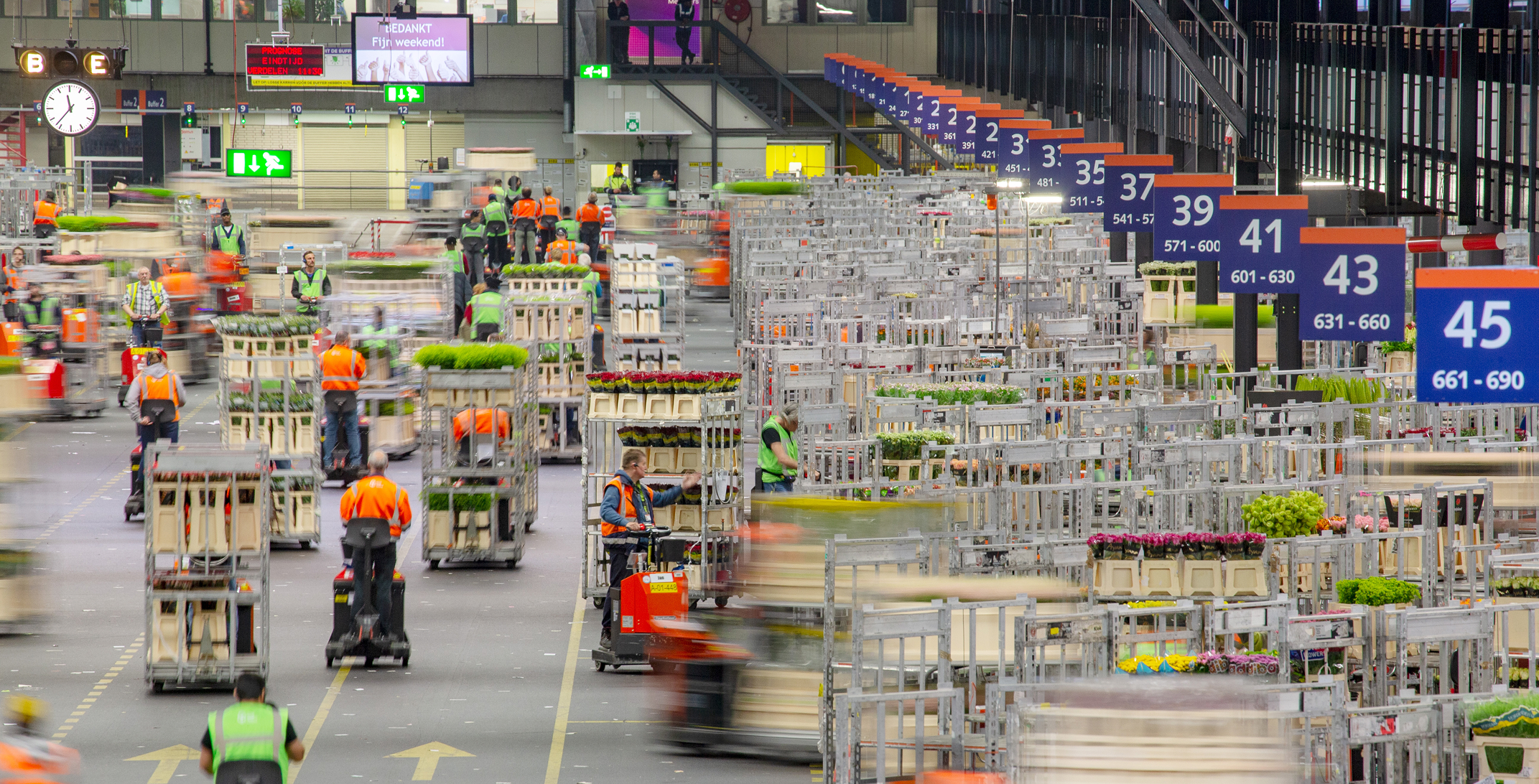
Digital marketplaces and physical hubs ensure that fresh products go from source to customer within 24 hours. The chain invests in more efficient and sustainable transport, while maintaining quality and freshness. European sales are concentrated within a radius of approximately 700 kilometers, so that the Netherlands actually serves the internal market for a large part of Europe.

Sources: Royal FloraHolland (2025); CBS (2024)


A major global player

The Netherlands has had a strong tradition in growing flowers and plants for centuries and still plays a key role in global trade today.

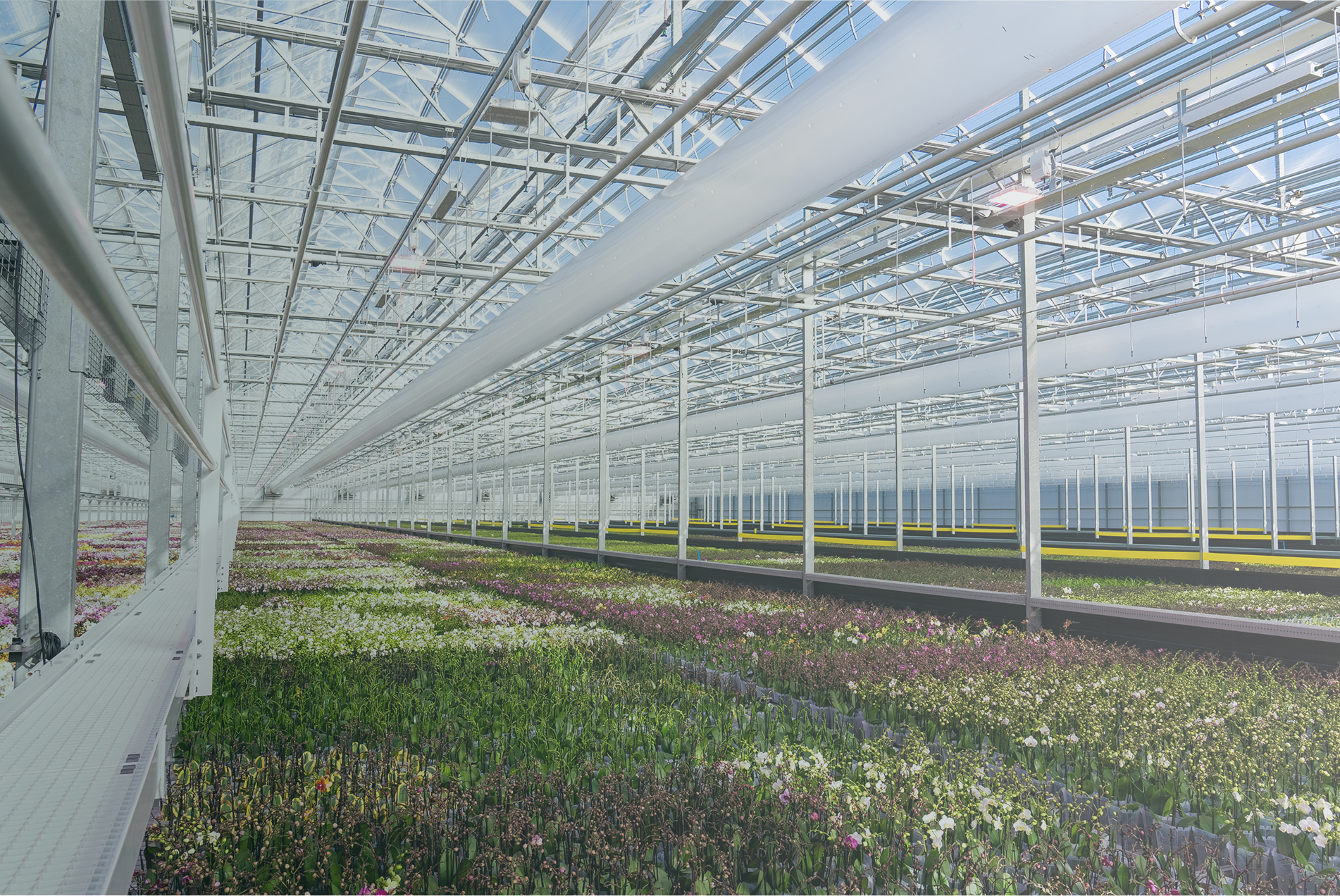
From a network of auctions, trading centers and distribution hubs, millions of flowers and plants are distributed around the world every day. What makes this sector special is the combination of knowledge, innovation and efficiency. This ranges from modern greenhouses to smart logistics and technology.

Floriculture has an export value of over €9.1 billion per year and contributes approximately €6.6 billion to Dutch GDP. This makes it the second agricultural export product in the Netherlands after dairy.

Sources: Royal FloraHolland (2025); CBS (2024)

International connection

Part of the range comes from countries around the equator and highlands.
Climate and altitude ensure consistent quality, for example long stems and large flower buds in roses. The Dutch network bundles, processes and distributes products quickly for the European market.

Most cut flowers and houseplants sold in the Netherlands are of Dutch origin. Every year, around 9 billion cut flowers are sold, of which around 6 billion come from the Netherlands itself. The remaining part, around 3 billion flowers, is imported from abroad. Roses account for the largest share of this import: around 2.5 billion roses come from countries such as Kenya and Ethiopia. In addition, Israel (with 182 million summer flowers) and Spain (with 108 million flowers) are important exporters to the Netherlands. Other countries each deliver less than 100 million flowers per year.

For houseplants, most of them are produced in the Netherlands. Nevertheless, Belgium and Germany are also important production countries, and to a lesser extent Denmark and Mediterranean countries. This means that almost all houseplants sold in the Netherlands come from the Netherlands or from the immediate neighboring countries. Of the turnover of Royal FloraHolland, the largest trading platform for flowers and plants, just under 20% of the total turnover of 5.2 billion euros comes from abroad. This percentage varies by product group, but underlines that most of the flowers and plants in the Netherlands are produced themselves or are traded through Dutch auctions.

Sources: Royal FloraHolland (2025)

Work and prosperity

Floriculture employs around 65,000 people in the Netherlands and more than 400,000 people worldwide, especially in countries such as Colombia, Ecuador, Kenya and Ethiopia.
These jobs provide a stable income for many families and contribute locally to education, health care and gender equality.
Whoever buys a bouquet therefore supports not only Dutch entrepreneurs, but also people in other parts of the world who grow with skill and care.

Sources: WUR (2023); Kenya Flower Council (2024); Fairtrade International (2024)


Fairtrade in-depth info: fair trade and local impact

In countries such as Kenya, Ethiopia, Colombia and Ecuador, floriculture offers work, income and education.
Fairtrade projects invest premiums in local facilities and strengthen the position of women in the workplace.

Sources: Fairtrade International (2024); Kenya Flower Council (2024)


Innovation and sustainability as drivers

The strength of Dutch floriculture lies in continuous innovation.
Companies are investing in renewable energy, better water management and cleaner cultivation methods. Every year, almost €1 billion goes to research and development. This accounts for approximately 5% of total Dutch R&D expenditure.
This is how the Netherlands continues to lead the world with knowledge, technology and responsible entrepreneurship. The ambition: a future-proof, climate-neutral and people-oriented floriculture sector that continues to contribute to the economy, work and well-being.

Sources: Horticultural Agreement (2023); CBS (2024); Wageningen Economic Research (2024)


How do we buy flowers and plants?

The Dutch spend around 1 billion euros a year on flowers and plants.
Sales channels: around half via florists, around a third via supermarkets, the rest through garden centers and outpatient trade.

Sources: CBS (2024)

Facts & figures

  • Floriculture export value: €9.1 billion per year
  • Contribution to GDP: €6.6 billion
  • Employment: 65,000 jobs in the Netherlands and 400,000 worldwide
  • Annual R&D expenditure for the horticultural chain: almost €1 billion
  • Goal: climate-neutral production by 2040

Sources: CBS (2024); Royal FloraHolland (2025); Greenhouse Horticulture Netherlands (2024); WUR (2024)

FAQs

Why do growers use crop protection products?

During the cultivation of flowers and plants, diseases and pests can cause great damage. Think of insects, fungi or viruses that affect leaves, disfigure buds or weaken roots. When a pest is left untreated, a grower can sometimes no longer sell (part of) the harvest. This not only means economic damage, but also a waste of raw materials, energy and water that have already been put into cultivation. Crop protection helps to prevent this.

Growers work according to the principle of integrated crop protection: first preventive measures, then biological or non-chemical agents and only a targeted chemical application as a last resort. Prevention starts with resistant varieties, clean starting material, good soil health, hygiene, monitoring and climate control. When it comes to pests, many growers use natural control agents such as predatory mites, parasitic wasps or nematodes.

In addition, growers must meet the quality requirements of trade, export countries and retailers, the so-called phytosanitary requirements. Flowers and plants must not contain diseases or harmful insects. Crop protection is therefore not only necessary for healthy cultivation, but also for food and product safety and the prevention of the international spread of plant diseases.

Why are plant protection product residues sometimes measured on flowers?

In laboratories, extremely small amounts of plant protection products can be measured, sometimes down to a satellite level (micro- or nanogram). That is why residues — so-called residues — can be found on flowers and plants, from both biological and chemical agents.

There are no MRL limits (Maximum Residue Limits) for flowers and plants that are not intended for consumption, such as fruit and vegetables. However, ornamental plants are also rigorously assessed. When authorized, the Board for the Authorization of Plant Protection Products and Biocides (Ctgb) looks at the risk of wipeable residue: the amount of product that may end up on the skin when touched, for example by workers in cultivation or florists.

The Ctgb only authorises products whose risk to humans, animals and the environment has been safely assessed. In the period between application by the grower and purchase by consumers, residue decreases further through degradation, evaporation, storage and water treatment in stores. According to the Ctgb, consumers are not at health risk when used normally (putting flowers in a vase, touching them, smelling them).

Resources: NVWA, Cgb

Are the remains of plant protection products on flowers dangerous to humans?

According to regulators such as the Ctgb and the Dutch Food and Consumer Product Safety Authority (NVWA), there are no indications that consumers are at risk by bringing flowers or plants into their homes that use authorized plant protection products. Flowers are not eaten and exposure through skin contact is very limited. When placing in a vase or smelling flowers, only a negligible amount of residue is absorbed.

Before each crop protection product is authorised, an extensive risk assessment is carried out based on international scientific standards. This includes possible effects on DNA, hormone balance, fertility, water quality and ecology. Only products that meet these requirements are allowed. In addition, funds are regularly reviewed.

Professionals who work with large quantities of flowers for a long time — such as nursery workers or florists — follow additional hygiene recommendations, such as gloves when working intensively and washing hands. Branch organizations support this with guidelines (including Stigas, VBW).

For consumers, the conclusion remains: normal use of flowers does not pose a health risk.

Are there risks for local residents?

In the Netherlands, a lot of research is being done into possible health risks for residents living in rural areas. The most important research is the RIVM program Research on Pesticides and Local Residents (OBO). In addition, it was measured whether substances can be found in the air, house dust, doormats and urine of local residents.

The RIVM study OBO-1 (2019) showed that plant protection products were measurable but did not exceed risk limits. The RIVM concluded that there is no reason to limit permits, but recommended that exposure be mapped more accurately. That is why follow-up OBO-2 (2023—2031) research is currently underway, focusing on possible health relationships, including Parkinson's, childhood leukemia, asthma, COPD and cognitive development.

The Health Council recommends a precautionary approach and further sustainability in crop protection. The floriculture sector endorses this line and invests in techniques such as drift reduction, precision spraying and IPM measures.

So far, research results have provided no reason for additional cultivation bans or additional buffer zones, but the research is being actively continued to take social concerns seriously.

What are growers doing to reduce the use of chemicals?

The floriculture sector is working intensively to limit and replace chemical plant protection products. The starting point is integrated crop protection (IPM): prevention, biological control and chemical only as the last step. More than 85% of companies use IPM.

Sustainable steps in practice:
✔ use of vibrations, fragrances and pheromones
✔ use of natural enemies
✔ resistant varieties and clean starting material
✔ soil improvement, compost, biostimulants
✔ precision applications instead of full-field spraying
✔ certification such as MPS ABC with environmental resource scores

MPS allocates resources to environmental taxes (red, orange, green) and sees a sharp decline in heavily taxing resources.

Decline in usage (MPS, 2015—2024):
🏺 potted plants worldwide — 29% total, in NL — 37%; NL's heaviest products of 7% → 0.5%
🌹 cut flowers worldwide — 35%; NL — 48%; heaviest products NL of 8% → 2%

New technology is accelerating this development:
🔹 pest monitoring drones
🔹 laser weeders against weeds
🔹 search engines in bulb cultivation
🔹 precision spraying technology with sensors
🔹 Crop Protection Environmental Indicator (MIG) for environmental choices

Sources: Ctgb (2024); NVWA (2024); RIVM (2019, 2024); MPS (2024)

FAQs